
Local Content Requirements Can Facilitate, Assist, and Support Sustainable Development
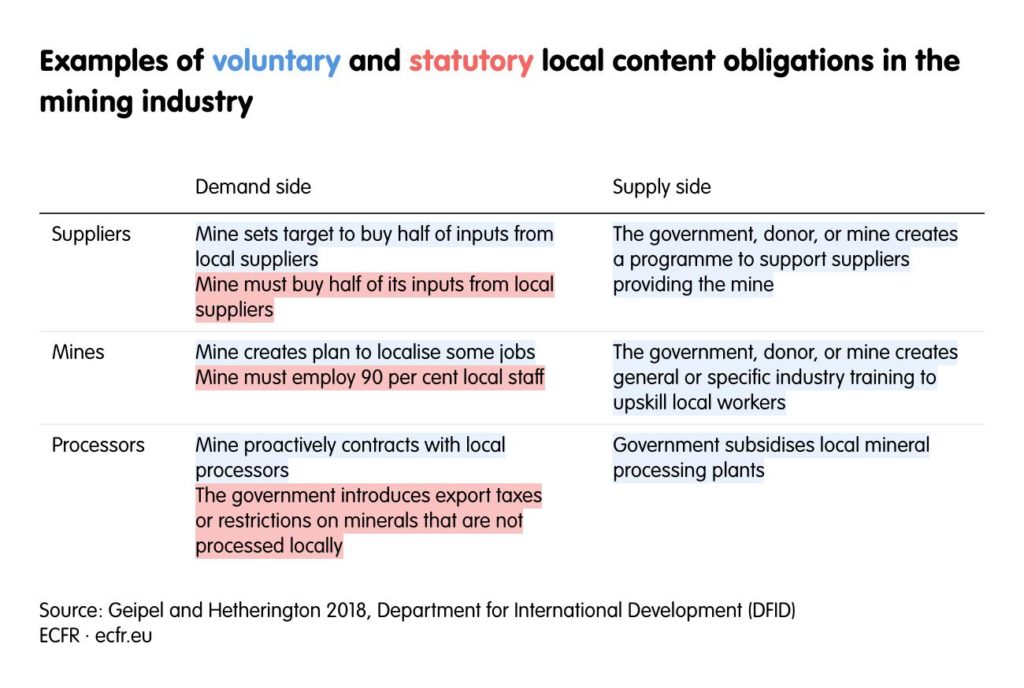
Gabrielle Marceau has published a new article on TESS Synergies, titled “Local Content Requirements Can Facilitate, Assist, and Support Sustainable Development: From New Safeguards, Schedules, and (Re-)Negotiations to Technology Transfer.” The article examines how local content requirements (LCRs) could contribute to sustainable development, domestic industrial capacity, employment, and economic security while remaining compatible with the […]
Retour vers le futur: Mélanges en l’honneur de Luc Thévenoz

Professor Gabrielle Marceau contributed to Retour vers le futur: Mélanges en l’honneur de Luc Thévenoz, a collective volume published in honour of Professor Luc Thévenoz. Her contribution, written with Leila Vassiltchikov-Ali Khan, is titled: “Le nouvel accord entre l’AELE et l’Inde : Plateforme d’encadrement pour les investissements directs dans le secteur des services financiers” The […]
Assistants in International Dispute Settlement: Navigating Legitimacy
Assistants in International Dispute Settlement: Navigating Legitimacy, authored by Gabrielle Marceau and Maria George, examines the role of the many actors who support adjudicators in international dispute settlement systems. Across approximately twenty international dispute settlement mechanisms, the book looks at the work of legal officers, référendaires, jurisconsults, registry and secretariat staff, and other assistants who […]
International Trade Law: Past, Present, Future – Tribute to Gabrielle Marceau
A special issue of the Revue québécoise de droit international has been published in tribute to Professor Gabrielle Marceau, bringing together contributions on international trade law, WTO reform, dispute settlement, sustainable trade, subsidies, food security, and the future of the multilateral trading system. Titled International Trade Law: Past, Present, Future / Le droit du commerce […]
The Underused Advantages of Schedules in the WTO for Evolving Trade Dynamics and Sustainable Development
This note concerns schedules in the WTO system. While schedules themselves are not new to WTO experts, the central argument of this piece is that they can be further used to facilitate more effectively modern forms of differentiation—in negotiation, rule-making, and WTO reform. An important value of schedules lies in their capacity to “operationalize” sustainable […]
Imperfect Agreements Can Protect and Implement the Rule of Law and Sustainable Development: A New Way of Working at the WTO

Trade and sustainable development need to operate within a more flexible framework that allows for adaptive implementations with iterative modifications when possible. Imperfect agreements can have a rich normative influence as they promote trade values and initiate the implementation of WTO reform. Today’s international storms and crises require rapid governmental, legislative, and security actions by […]
The World Trade Organization Belongs to the Future — But How Do We Get There?
Introduction Trade has evolved and most modern transactions today have cross-border dimensions; thus, they become trade-related matters. In that context, the World Trade Organization (WTO) has proved to be a relevant forum for discussing new issues, such as trade-related climate measures (TrCMs), digital trade, COVID-19-related actions, supply chains, and intellectual property (IP). Notably, Ministerial Declarations […]